The Lasting Romance of European Rail
The golden age of the railway journey — and why the romance of travelling by train has never quite left us.
The Grand Passage Journal · 7 minute read
There is a reason the railway carriage has never stopped appearing in our stories, our films and our imaginations long after faster ways to travel arrived. The great trains of the last century sold something the aeroplane never could — not merely passage between two cities, but the journey itself, rendered as an event worth dressing for.
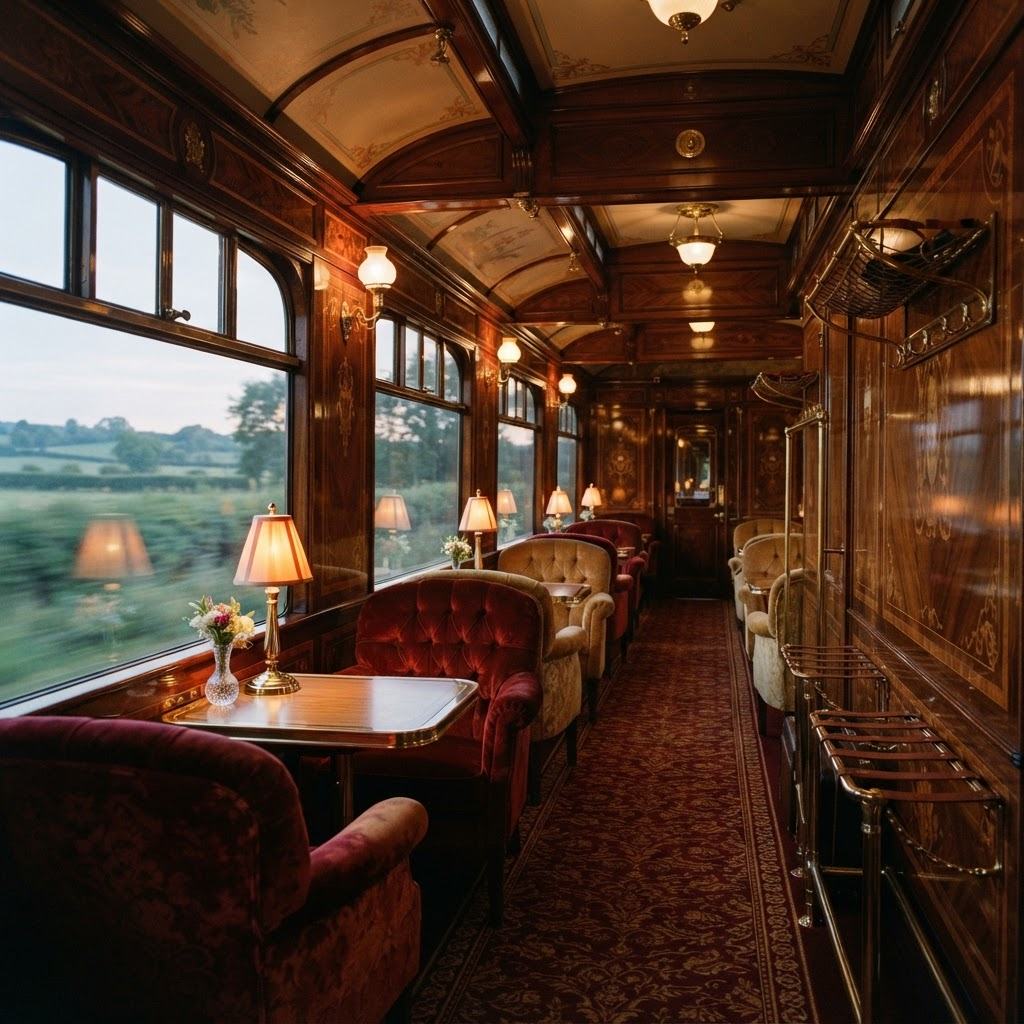
The golden age understood the carriage as a room rather than a seat. Marquetry panelling, brass fittings, table lamps casting warm pools of light, a dining car where dinner was served on porcelain as the countryside slid past — every detail insisted that the hours between departure and arrival were not dead time to be endured but the very substance of the trip.
The train never promised to be the fastest way to arrive. It promised something better: to make the arriving worth waiting for.
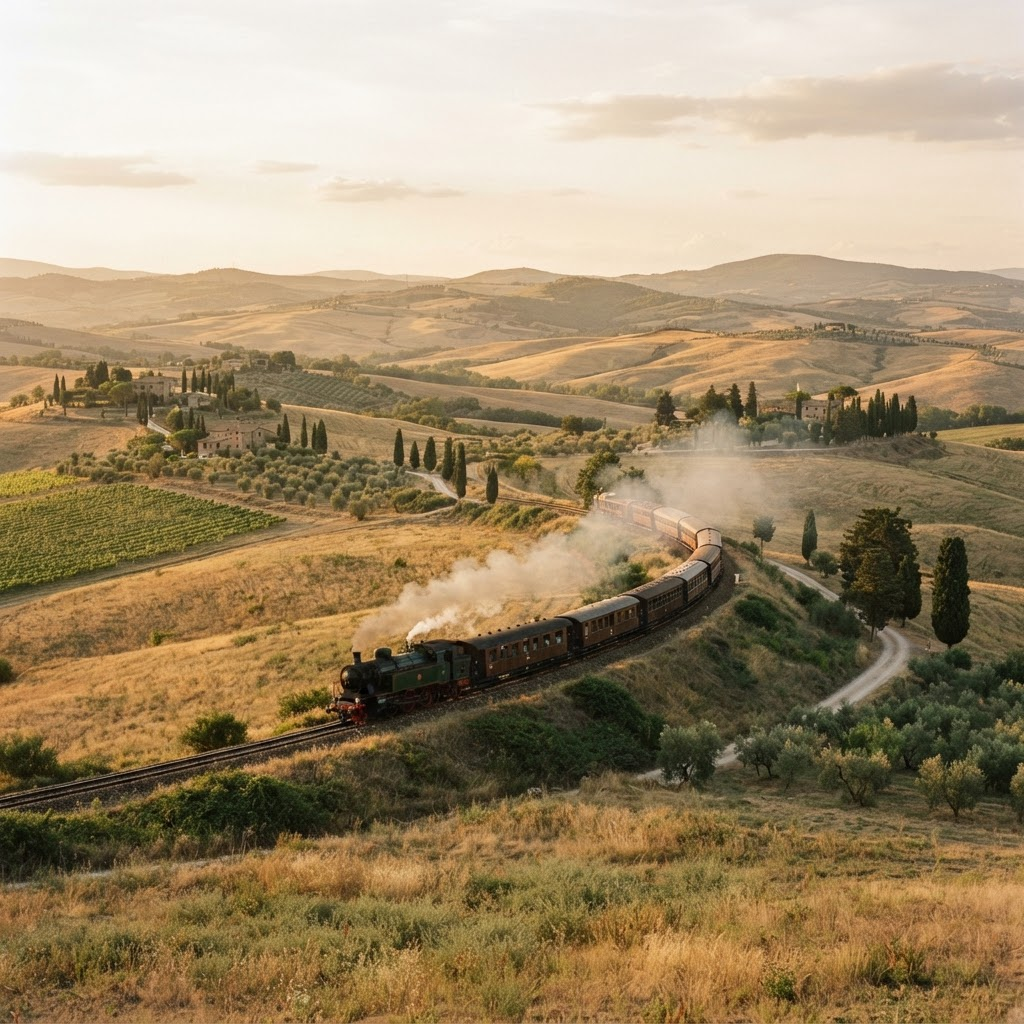
And the landscape cooperated. A train moves at the speed of looking: fast enough to feel the miles accumulate, slow enough to watch a valley open, a coastline appear, a city gather itself at the edge of the window. One does not glimpse a country from a railway carriage; one is introduced to it, gradually, at conversation’s pace.
What is remarkable is how little of this romance has actually faded. A new generation, fluent in frictionless travel and quietly tired of it, has rediscovered the pleasure of the long rail journey — the ceremony of boarding, the unhurried dinner, the strange luxury of being unreachable for an afternoon. The night train, once written off, is filling again.
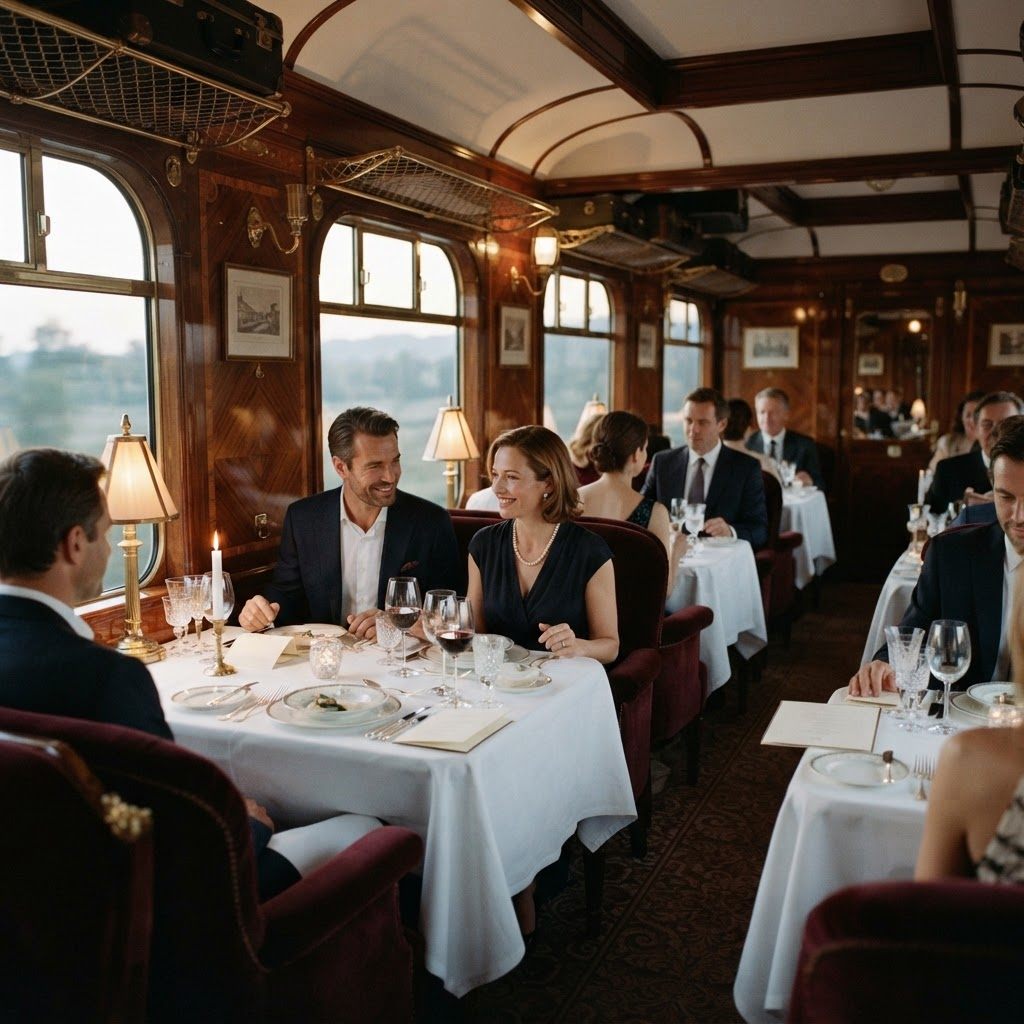
The Rail Passage exists to protect exactly this: the journey composed as a chapter, from the first step onto the platform to the final, satisfying arrival. The train was never the fastest way to travel. It was, and remains, the most beautiful.